Happy Australia Day!

Australians All Let Us Rejoice…

For on the 26th of January, many years ago, our country was invaded, its land claimed by a foreign power and a long running campaign to subjugate and kill its native inhabitants was instigated by a foreign power: The British. Um, actually I was meaning to say something about mateship, the lucky country and crack about us probably failing our own citizenship test, but there’s no way around the fact that historically, Australia Day wasn’t a happy time for a lot of people, much in the same way that Thanksgiving in America is often seen–rightly or wrongly–to commemorate of an indigenous slaughter.

Cartoon by Joel Tarling

Cartoon by Joel Tarling

Almost all of us are immigrants to this nation, and we bring with us our cultures, our histories, our food, let’s not forget food, and to some degree we all adopt the cultural cringe and attempt to distance ourselves from Being Lara Bingle and The Shire. That’s not really Australian, we say. January the 26th means a lot of different things to different people, but perhaps the most important thing to do is take what may not have had the most auspicious of beginnings, and reclaim it for the future. We are lucky, having avoided most of the economic crises that have hit other countries in the last two decades. We have relatively low unemployment, a good name internationally for both business and tourism, and a healthcare system that Americans can only dream of—or cringe at if they’re staunch Republicans, I suppose.

We’re lauded as friendly, hard working, and with some notable exceptions (cue the cultural cringe once more) multicultural. Technically, on Australia Day we’re supposed to celebrate the landing of the first fleet. I have no ties to the first fleet. Many of my friends don’t either. But we can and do feel privileged to live in this country and for many Australians, Australia Day is simply a time to celebrate those things that make Australia great—the country that is, not the movie. Clearly the only thing great about that movie was Hugh Jackman shirtless. And I believe we can do that while acknowledging that most of us live on the land of native peoples who have never ceded sovereignty of it to the occupying power that is still here today, that they too are part of our rich—if sometimes bloody—history, and while we count our blessings, I think we should also spare a thought for those who we have not always treated in the spirit we laud ourselves for today. And those people may not be Indigenous Australians. They may have been Greek or Italian, Chinese or Vietnamese, or the more recent immigration waves of Indians and Africans that are now seen as ‘un-Australian’. It may have been those who don’t drink, or vegetarians, or just that weird kid in the corner with the acne and no friends because he or she wasn’t cool.

We Are One, but We are Many
And From all the lands on earth we come
We share a dream, and sing in once voice,
I am, you are, we are Australian

~ I am Australian by Bruce Woodley and Dobe Newton.

We don’t want your huddled masses yearning to be free. We just want you, as you are. She’ll be right. We are Australian. This is our national day. So let’s be proud of what we have done well, and resolve to do better what we may have done less well in the past.

Love

Matthew Lang

Matthew’s new Australia Day short story, After the BBQ, is available now from MLR Press.

After the BBQ. So what has happened to Trent since The Secret of Talmor Manor anyway?

So what has happened to Trent since The Secret of Talmor Manor anyway?

More than Romance: Ana Bosch

Bonds of Death


Today we bring you Matthew’s interview with Author and Illustrator Ana Bosch, who considers herself a writer of more than just romance, and currently working on a trilogy about, well, why don’t you just wait and find out? Matthew began by asking her why she wrote:

Ana: There are so many reasons! Primarily, I write because I love crafting stories. I love exploring the ways characters interact with each other, and I love being able to step outside myself and into another world. I also find it cathartic. While none of my writing can be considered anywhere near autobiographical, I often find ways to make sense of the struggles of my daily life by twisting and translating them into fiction—often in surprising and unpredictable ways.
Also, as someone with tastes that usually don’t fall within the realm of mainstream American entertainment, it’s really important to me to be able to share stories that are a little outside the norm and serve an audience that is often neglected by the mainstream.

Matthew: You’re also an illustrator, correct? Do you find your writing informs your illustration or vice versa?

Ana: It really does go both ways. My artistic background was a source of inspiration for Art of Death, Bonds of Death, Lifelines (the upcoming third book in my undead series), and even my Christmas story, Lucky. Art is a big part of my life, so many of my stories involve art or artistic characters. Riley, the main character from the undead series, shares my profession. But ironically, he had the job before I did. I didn’t become a freelance illustrator until after I wrote the draft of Art of Death, and I’ve had a lot more luck in the field than poor Riley.
I also think my artistic background has helped my writing itself. It’s much easier for me to visualize and describe characters and settings now than it was when I had less artistic experience.
On the flipside, my desire to be a storyteller definitely influences the way I create my illustrations as well. While every job is different, I prefer to create conceptual illustrations that suggest a story and raise questions in the viewer, rather than just displaying something pretty. It’s easier to do this when I’m working with my own stories, but when I’m given enough information and freedom, I try to do it with all my work.

Matthew: What makes a story worth reading for you? Worth writing?

Ana: I don’t have as much reading time as I would like, so I have to be selective. For a story to be worth reading, it has to be fresh, new, and different. It has to be either wildly creative or from a different perspective, and it has to challenge me to think. I don’t read a whole lot of fluff and tend more toward literary fiction. I have trouble reading for relaxation because, whether I want to or not, I always end up over-analysing everything I read, both for its literary merit and for its socio-political tilt. I always find myself asking stuff like, “Does this author remember that people of colour exist?” or “How do gender politics play a part in the story?” and so on.
As for what makes a story worth writing, again, it has to be fresh, new, and different. If I feel like someone else has already said what I want to say in my story, then I don’t feel compelled to write it. It also has to be something that captures my attention enough for me to see it through from start to finish. Usually, the story will find a way to tell me whether or not it needs to be written.

WayYouAre_headerbanner


On a completely non-writing note, what’s your favourite tea and why?

Ana: This is a tough question, because I have so many favourites! I love high-quality loose black tea, especially Assam. And I also love crappy black tea from a tea bag—and chai—with milk and sugar, the good old Indian way like my parents always made it.
I also love flavoured black tea, more for the nutty flavours than fruity or floral. Adagio sells really good hazelnut and coconut flavoured black tea.
But overall, I regularly drink every type of tea I can get my hands on—black, green, white, oolong, and tisanes like rooibos, chamomile, peppermint, etc. There’s no such thing as too much tea.

Matthew: Bonds of Death is the sequel to Art of Death. For everyone who hasn’t read Art of Death, can you give us the condensed version and will someone be able to jump straight into Bonds of Death immediately?

Ana: I really do feel that the blurb for Art of Death does a good job of summarizing the plot:
Despite the support of his rich older boyfriend, starving artist Riley Burke is determined not to be a trophy—hence his second job as a nude model at the local art school. It’s important to him that he pay his own way, so when the artist Coliaro requests a private modeling session with him, he jumps at the chance to earn some real cash.
Then he hears the rumors—that Coliaro is undead. That his worshippers perform rituals to fill him with life energy. That every time he paints a male nude, the painting transforms to depict a gruesome murder. And that shortly after, a young man turns up dead.
The source of these rumors is a man named Westwood, who claims to be an instructor at the school and warns Riley not to get involved. Riley ignores the advice—but when the rumors pan out and another murder looms, he turns to Westwood for help. Westwood is clearly keeping secrets. He’s dangerous, and Riley doesn’t know if he can be trusted—which makes him all the more attractive. Riley is in way over his head… and his involvement with the undead may make him the ultimate target.

There isn’t too much else I’d want to say about the plot of Art of Death because just about everything I can think of is a spoiler. It’s much more fun to read the story and discover all the mysteries as they unfold. What I will say is that it really is a paranormal mystery. There is romance, but the focus is on the plot. It’s also on the dark and gritty side, even though it has some comedic and light-hearted moments.
I wrote Bonds of Death so it would hopefully make sense to people who haven’t read Art of Death, but the series is really meant to be read in order, with Art of Death first.

Matthew: From what I’ve seen, Westwood is clearly a vampire, but always use the word ‘undead’ rather than ‘vampire’. Is there any particular reason you’ve decided to go that route? Any possibility of seeing any other undead nasties creeping out in the story?

Ana: I’ve only seen one or two readers calling this a vampire series, mostly for lack of a better term for categorization. But the undead actually aren’t vampires at all. I don’t like writing about pre-existing paranormal creatures because the best part of paranormal/fantasy is getting to make your own rules. Westwood and the rest of the gang are a new creation, and “undead” was the most accurate name I could give them, albeit a general one.
The undead do have a couple things in common with vampires. They are former humans who have died and come back. They don’t age, and if they’re injured or killed, they’ll regenerate. They also have superhuman strength. But that’s where the similarity ends.
The undead don’t have fangs and don’t drink blood to survive, and they can’t turn a human into one of them. They have no problem with sunlight. They live as humans and have to eat, drink, sleep, and exercise like everyone else. Aside from superhuman strength, each undead also has his own unique set of supernatural abilities, along with one fatal weakness that can return him to eternal death.
The most unique thing about the undead is the way they can share their abilities with humans. By performing the ritual of an undead, a human can channel some of the undead’s abilities, while at the same time making the undead stronger. But each undead has a different ritual, and some aren’t quite as benign as others. The worshipping ritual is central to the plot of Bonds of Death. Riley is put in a position where he has to worship Westwood in order to protect him and make him stronger, but that doesn’t sit well with him when he’s seeking a relationship of equals and already suspects that Westwood doesn’t respect humans.
As for the possibility of seeing other undead nasties about… I’m currently writing Lifelines, which is the third book in the series, and there are a couple new things to look out for here. First, there’s a new undead dude whose ability is inspired by marionettes, and that’s been great fun to write. This guy’s followers use a blood ritual to gain the ability to control humans like puppets.
Also in Lifelines, we’re introduced to a certain type of corrupted undead, a fake and faulty version of the real thing that presents a new threat. But I’ll have to leave it at that if I want to avoid spoilers.

Matthew: Now we have an excerpt from Bonds of Death to share. Would you mind introducing it for us?

Ana: Not at all! This excerpt is from chapter 8. Riley has been invited to a wights-only party by one of Westwood’s enemies. This is a type of party that brings the undead in the community together with local humans who could potentially sign on as their worshipers. I like to joke that it’s kind of like a demented version of speed dating. But as usual with Riley, he fails to see the danger in the situation. In this scene, he poses for a painting for Porter, his best friend, and they talk about Westwood and the upcoming party.

On Wednesday night, Porter shyly asked Riley if he’d be willing to pose for a painting, “for old time’s sake,” as he put it. The setup in his bedroom wasn’t ideal, but at the moment he couldn’t afford to rent a studio space.

As requested, Riley sat sideways in a wooden chair, facing away so Porter could paint his back. Riley usually preferred Porter’s paintings when they included the model’s face because he had a knack for capturing likenesses and subtle hints of emotion, but a painting from behind meant he didn’t have to keep a rigid expression, and they could even converse while Porter worked. As Porter laid down the underpainting on his canvas, Riley filled him in on what had happened during the days he’d been gone, including all the details of Riley’s foray into designing baby dolls and Matt’s promise to send him more work.
A couple hours into the pose, Riley asked, “How does my back look? Is it getting too bony?”
Porter laughed out loud. “Relax, Riley. It’s just a painting.”
“I’m curious, that’s all.”
“You’re as gorgeous as always, okay? Jeez, I never understand you people with your perfect bodies who fret about every pound you gain or lose.”
After a pause, Riley reluctantly explained, “Westwood thinks I’m getting too skinny.”
“Is that why he hasn’t been coming around lately? What a douchebag.”
“How do you know he hasn’t been coming around? He usually lets himself in through my window.”
“Well, it’s been a long time since I’ve heard your bedsprings screaming for mercy.” He chuckled. “Or you, for that matter.”
Riley’s face went red. “I didn’t think you could hear.”
“Uh, yeah. I can hear. Mrs. Mason and I always analyze your performances when we run into each other in the stairwell.”
“Mrs. Mason? The old lady from the third floor?”
“Yep. I love her. She’s hilarious.”
“Man, you suck.” He waited, listening to Porter’s rhythmic scratchy brushstrokes for a minute before speaking again. “But no, that’s not why Westwood hasn’t been around. I think he’s… mad at me.”
“Why should he be mad at you?”
Riley frowned. “Well really, it’s all Quinn’s fault. She put me on the spot. She said Westwood needed to get stronger in order to survive an attack with your blood, and she asked me to worship him.”
The brushstrokes stopped. “And?”
“I said no. Well, I didn’t exactly say no, but I didn’t say yes, and Westwood obviously knew I was about to say no. He walked out of the meeting. And he was my ride, so Quinn had to drop me back at his house to pick up my car. And by the way, it doesn’t get any more awkward than being stuck alone in a car with Quinn.”
Porter began painting again. After a minute, he said, “In a sense, I see where Quinn is coming from. I personally don’t care if Westwood bites it, but apparently he does good work for Lychgate, so I guess it would be best for him to pick up a follower and get stronger.” He paused. “But you and Westwood are sleeping together. You’re the last person Quinn should be asking.”
“You think so?”
“Definitely,” Porter said. “You know how I feel about Westwood. He’s in it for himself. He always has been. You’ve been seeing each other for six months, and he probably doesn’t even know your middle name.”
“We didn’t see each other much for the first three months. Things only started picking up in June. And besides, I’m fine with things the way they are. He doesn’t need to know my life story.”
“But he’s already taking advantage of you, and if you start worshipping him, it’s just going to go to his head.”
“He doesn’t take advantage of me,” Riley protested. “I know how to take care of myself, Porter. And when he and I are together, I want it as much as he does.”
“I’m sure you have wonderful sex together,” Porter said. “But that’s not what I mean. It’s like when you were telling me about your big car chase. All Westwood cared about was running that other car off the road so he could save his own skin. You said it yourself; he didn’t even consider what it could have meant for you until Quinn told him off.” Again, the brushstrokes slowed. “Even though I’ve been undead for twenty years, I live as a human, and most of the undead I run into think I’m human. It’s become clear to me that most undead don’t have a lot of respect for humans. They think humans are inferior, and they don’t have much consideration for a human’s life. Since they can die and come back over and over, they forget what it’s like for the people who only have one shot at it.”
“Westwood is ignorant,” Riley admitted. “He doesn’t know any better. But that doesn’t mean he can’t change.”
“Do you think worshipping him is the way to get him to change?”
Riley didn’t reply. He remembered the last time he and Westwood had slept together. He remembered Westwood holding him down, positioning Riley’s body to his liking, and going at it without another thought. That night, Riley might as well have been a hole in the mattress, for all Westwood seemed to care about his half of the experience.
After a moment, Porter asked, “Can you relax your shoulders? Your muscles are bunching.”
“Oh, sorry.” Riley corrected his posture.
“Perfect. Thanks.” The brushstrokes resumed. “I’m sure there’s another human out there who’s willing to worship Westwood. It may be hard for him to find and seduce that person. He doesn’t know how to turn on the charm like, say, Thackary for example. But he’ll find someone. Heck, maybe you can help him look.” Another pause. “I just don’t know if you want to go opening yourself up to him like that.”
“I kind of feel the same way.” Riley gave a wry laugh. “You know, I’m going to a wights-only party this weekend. Maybe I’ll meet someone for him there.”
At this, Porter sputtered. “Wait a minute—you’re going to a wights-only party?”
“Yeah. Why is that so surprising?”
“Those parties are hardcore, dude. You don’t go to a wights-only party unless you really want to become a part of the world of the undead. I guess I figured that even though you were dating an undead guy, you still wanted to live a normal human life.”
“I do want to live a normal human life.” Riley hesitated. “To be honest, the main draw for me is the prospect of free food.”
Porter’s resulting cackle was so loud it made Riley wince. “Why is that funny?” he demanded.
“Dude, you’re delusional! I don’t even know what to say to you! If I invited you to an S&M orgy, would you come just for the hors d’oeuvres?”
“Not for, like, a cheese cube tray. But if you did something cool with smoked salmon or maybe some of those Thai lettuce wraps—”
“My God, Riley!” Riley heard the sound of paintbrushes clattering on the ground. “That’s it. I’m buying you groceries with my next paycheck.”
Riley glanced over his shoulder. “Hey, why did you stop painting?”
Porter tossed Riley his maroon silk robe. “I’m done.”
“Really?” Riley pulled on the robe, heading around to the other side of the easel to take a look. As usual, he was awestruck by Porter’s talent.
Porter’s hand lowered onto his shoulder, bringing him out of his trance. “Hey, buddy?”
Riley turned and met Porter’s gaze. His roommate looked unusually serious. “What?”
“If you’re really going to go to that wights-only party, just… just watch your back, okay? As much as I hate Westwood, at least he’s an honest guy. He doesn’t play games. Not everyone else who goes to those parties is like that.”
Riley considered his words. He knew it was silly, but the more people warned him about the dangers of wights-only parties, the more he wanted to go. He still didn’t see the harm in it. After all, no one could force him to perform a ritual if he didn’t want to. He’d go, scope the place out, and politely excuse himself. No big deal.
“Thanks,” he said to Porter at last. “I’ll watch my back.”

Book Info:
Book Title: Bonds of Death
Link: http://www.dreamspinnerpress.com/store/product_info.php?products_id=3312

Blurb:

Fresh out of a messy breakup, starving artist Riley Burke has found happiness with Westwood, his new undead lover—enough happiness that when his friend Porter warns him that the undead only see humans as flashy playthings, Riley looks the other way. After all, he only wants a bit of fun. It’s not like he’s asking Westwood to put a ring on his finger.

Once a brutal and violent criminal, Westwood now atones for his past by punishing the undead for crimes against humans. But his job doesn’t make him popular with his undead brethren—and someone has a thirst for revenge.

That someone has uncovered Westwood’s weakness and is on the hunt. To withstand an attack, Westwood must bolster his strength by taking on a human worshipper. He turns to Riley, but Riley is terrified of the bond Westwood’s ritual will create. He would rather risk his life pursuing Westwood’s attacker than risk opening his soul to a man who doesn’t respect him. But time is running out, and if Riley and Westwood can’t come together, one of them might pay the ultimate price.

Want more of Ana Bosch? Check out her blog, find her on facebook or stalk her on twitter. You can also see her art portfolio online here.

Pre-Order ‘The Way You Are’ Today!

It’s nearly here. I’m going over the final galleys now and the novella should release on the 2nd of January 2013 (well, the 3rd for us Aussies given  Dreamspinner works on American time). You can Pre-Order the eBook now for $3.99, or $2.99 if you catch the Christmas sale. And because it’s Christmas, here’s an excerpt from the story–the very first time our friend Leon (that’s him in the blue hoodie), meets Warrick the student nurse, AKA the guy in the green box on the cover. Not the footnotes start at seven because this section is already six footnotes in.

The room wasn’t what Leon had been expecting. For starters, it was mostly bare, with two ward beds empty and the third containing the limp figure of an aging matron, a thin, white cotton sheet doing little to conceal her bulk.
Leon focused his gaze on the furthest corner of the room, where a yellow privacy curtain had been drawn back, allowing sunlight from the nearby window to play over the unmoving figure in the fourth hospital bed. The bed was large to Leon’s eyes, and the patient it contained looked a bit like a child in comparison, even though Leon knew Rook to be at least six inches taller than himself. The bedsheets were tucked around the recumbent figure, still neat and crisp, as if they had just been fitted around his body. Obviously, coma patients didn’t move much. An unused tray table and a soft chair—upholstered in the poo brown that had been ever so popular in the 1950s or some other decade before Leon’s time—sat off slightly to one side, a bunch of wilted flowers on the bedside table, and a small stack of get well cards the only personal touches in the otherwise institutional space.
Leon would have expected a scrunched tissue or indented cushion or something—anything—to indicate the presence of parents, but apparently they lived far out in the middle of Woop Woop7. The last few days hadn’t been kind to Rook—or as he was known on his patient chart, Travis Rookford. The left side of his face was still swollen and bruised, the skin lacerated with a myriad of cuts that, according to newspaper sources, had been inflicted by a smashed bottle. One source8 said Rook was lucky to not have lost an eye. His right leg was elevated and in a heavy cast, and Leon knew that somewhere under the chest bandages were a number of broken ribs and a lot of internal bruising, and a significant amount of internal bleeding.
“H-hi,” Leon said.
The only response was a triple-fluted snore from the lady in bed three and the steady beep-beep-beep of Rook’s heart monitor.
“You probably don’t remember me. Actually, I’d be surprised if you did,” Leon said, eyes wandering over the tubes that led from Rook’s muscled arm to the bag of intravenous fluid hanging from its polished metal pole on wheels. “I, uh, wanted to say thanks for sticking up for me. Well, not for me specifically but, well… us, you know? You didn’t have to do that. And if you hadn’t, you’d probably still be fine and well.” Leon paused, “Maybe you’re wishing you didn’t say anything—not that I’d blame you, but, um… yeah… I wanted to say thanks.”

As he sat fidgeting on the poo-brown chair, Leon felt foolish, speaking to a man in a coma, whom he knew next to nothing about. “Okay, well… thanks for listening,” he said, staring down at his feet. “Assuming you can even hear me, that is.”
“He should be able to,” a new voice said.
Leon literally jumped, nearly tripping over his own feet on the way down.
“Sorry,” the deep voice said. “I didn’t mean to startle you.”
The nurse was young, and Leon guessed he was a student on a hospital placement. He had the build of a rugby player, with firm muscles barely hidden in the otherwise shapeless green hospital scrubs he wore. His face was broad, and his hair closely cropped. His skin was either tanned by the sun or the result of mixed parentage, and the subtle almond shape of his eyes made Leon suspect the latter.
“Geez, way to give a guy a heart attack.”
“Oh, that’s okay,” the other man said, grinning just enough to show his teeth. “I’m fully trained in CPR and emergency procedures. After all, we are in a hospital.” Then the nurse hesitated, “Wait, that was a joke wasn’t it?”
“Uh, kinda,” Leon said, somewhat taken aback.
“Right. Sorry. I have a tendency to take things very literally.”
“I see,” Leon said, more than a little uncertain if there was any socially acceptable reply to a phrase like that. There was also a slightly more certain feeling that he was being flirted with.
“Anyway, medically there are studies that suggest it’s good for coma patients to be talked to. Sometimes they can hear you even if they can’t respond, and some say it registers in their subconscious even if they can’t consciously hear you.”
“Okay,” Leon said. “That’s… good to know.”
“So… you’re a friend?” the other man asked after a moment of awkward silence.
“Me? Oh no…. We don’t really know each other at all.”
“Right… right.” The nurse’s eyebrows rose. “Sorry, I just assumed that—”
“I wanted to thank him for what he did,” Leon said. “He didn’t have to, and it meant—means a lot to me. I know, I know. It’s stupid and a little creepy and—”
“Actually, I think it’s kind of sweet.” Yep, there was definitely flirting happening. “And it’s good that you came. He doesn’t get many visitors.”
“I noticed,” Leon said, his eyes drifting back to the tiny stack of cards and the wilted flowers. “I’m Leon, by the way.”
“Warrick,” the big man said, holding out his hand. “Nice to meet you, Leon.”
“You too,” Leon replied, grasping the other man’s hand.

For a moment hazel eyes locked unflinchingly with brown, and Leon found it hard to breathe. Then the alarm on his phone went off, startling them both.
“S-sorry,” Leon said. “I gotta motor—class.”
“Of course. See you later?”
“Um… maybe,” Leon said, his cheeks flushing slightly as he darted from the room.


7 Another example of Australian slang. Politely this translates to “back of beyond” and less politely to “bum-fuck nowhere,” but probably with less bum and more sheep. At least, according to the Kiwis across the pond, but they’re just deflecting, really.
8 Vanessa Strangetooth, 20, student of cosmetic dentistry who possessed a perfect smile, obviously.

WayYouAre_headerbanner

Now Screening: Confessions of a Drunkard

It’s been a while, but we can now show you Confessions of a Drunkard, Matthew’s screen debut. Filmed for the 48 Hour Film Festival, Confessions of a Drunkard made it to the finals before being beaten by some very stiff competition. It’s finally made it onto YouTube, and more to the point, we’re now allowed to show it to you, so enjoy. In case you’ve missed it, Matt’s the one in the rainbow t-shirt. We’ll try to slip you some pictures if we can get Matt to agree not to fire us for it. We will be slipping you cover art from his newest novella shortly. It’s just about ready to go and The Way You Are is slated for a January release at the moment, but it might be pushed back if the edits drag out.

In other news, Archbishop Desmond Tutu has urged Uganda to reject its ‘Kill the Gays’ bill, likening it to the apartheid Africa fought so long to reject, scientists have found homosexual behaviour in male animals makes them more attractive to female animals (okay, at least in fish), and Simon & Schuster have launched a new self-publishing arm brought to you by the Author Solutions crew–they who rip off would-be authors for thousands of dollars and take half of any sales that eventuate. Here’s a tip: avoid them.

Here’s to a happy holiday season, whatever season you’re actually in, or what season the weather thinks you’re in. Currently Australia is fluctuating between spring cold and summer heat, and we’re trying to convince Matthew to spend more time writing and less time at the beach with his new man. Maybe the storms will help. Or not. In any case, check back soon for more writerly goodness and hopefully a cover art reveal or two.

If you’re in Melbourne, Australia and feel like making a film or two, check out the Film By Democracy crew.

More than Romance: Kim Fielding

Brute by Kim Fielding, Cover Art

Today we bring you the first in what will hopefully become a series of interviews with writers who publish under the gay romance banner, but consider their stories to be more than romance novels, much in the way Matthew’s own writing tends to not foreground romantic relationships. We are incredibly happy to present Matthew’s recent interview with Kim Fielding, author of the Ennek trilogy and the just released Brute. Matthew began by asking her why she writes:

Kim: I don’t have much choice in the matter. I’ve had stories inside my head, clamouring to get out since I was a little kid. It’s only in the last few years I’ve found the courage to share them with others. When I go without writing for very long I get itchy typing fingers. It’s a huge plus for me that readers seem to enjoy my work, but frankly I’d probably keep on writing even if nobody ever saw my words but me. It’s all probably some kind of diagnosable compulsion, but not one I ever want to be cured of.

Matthew: Is there any particular reason you decided to write about two men?

Kim: Well, I like men! Seriously, I have very little control over who my characters are and what they do—or who they’re attracted to. And I think there are some specific advantages to writing about two men. It allows me to play with power themes and tropes and also to challenge stereotypes. It also creates a distance between myself and my characters that I think is a good thing. Nobody is going to assume there’s something autobiographical about my novel when the protagonist is a male, gay, maimed giant, for instance. Also, I write the kinds of things I enjoy reading. I’ve never liked het romance very much; it tends to bore or frustrate me. I think some of the ideas in gay romance are a lot fresher.

Matthew: I know you say you write more than ‘just’ romance. What then do you write and how do you feel it differs from traditional romance stories?

Kim: I think a lot of what I write defies neat categorization. Maybe that’s because the books of many of my favourite authors, such as Neil Gaiman, Isabel Allende, and Kurt Vonnegut, also cross genre boundaries. A lot of what I write has elements of magic or paranormal in it, but those elements tend to be blended in pretty thoroughly with everyday life. I suppose if I had to choose a category I felt most comfortable placing myself in, it might be magical realism. In my newest novel, for example—Brute—magic definitely exists. People can be healed by it and one of the main characters has dreams that foretell deaths. But most of the book centers around more everyday concerns, such as how to earn money, how to find friendship and love, and how to weigh conflicting duties.

One thing that sets a lot of my work apart from more traditional romance stories is the role of the relationship versus other plot elements. The relationship between the men is very important, but it’s not the only important thing going on, and in fact it’s probably not the most important thing in the story. In my Ennek trilogy, for instance, the heroes are faced with a number of really formidable challenges: loss of family, abuse of power, slavery, tyranny—to name just a few. They’d have to face those things even if they’d never met. But their growing relationship with each other helps them meet those challenges in different ways.

Matthew: With your latest book, Brute, you’ve chosen to write about a one handed man who considers himself ugly and a blind man—what drew you to these characters?

Kim: I chose that name in part because I was trying to say something about labelling: how we often tend to live up to (or down to, as the case may be) the things people call us. And sometimes those labels become so much a part of our identity that few people take the time to get to know the real person. And I liked the irony, of course, because in truth Brute is anything but—he’s actually a very kind and gentle man who takes his responsibilities very seriously.
What Brute is called plays an important role in the story. I can’t tell you more than that without giving too much away.

Matthew: Do you think there’s a risk writing a romance between two characters who are not conventionally handsome? There’s been a lot of talk about m/m fiction being ‘escapist’ and part of that escapism would normally be having physically beautiful characters.

Kim: I guess I’ll find out! Personally, I get a little annoyed when characters are too gorgeous. Escapism is fine, but I guess I like a good dose of realism too. I really do hope there’s room in the genre for unconventional heroes. My novella Speechless has a character who has aphasia and cannot speak or write. After that book came out, I received emails from fans who had disabilities of their own, and who were pleased to find a story about someone who was imperfect.

Matthew: Can you tell us anything about what you’re writing now?

Kim: Sure! I’m in the editing stages of two stories that will be released in 2013. Venetian Masks will come out in February or March. It’s a contemporary romance novel about a man who reluctantly takes a solo trip to Europe after his boyfriend dumps him. In Venice he meets an American ex-pat who has a lot of potentially dangerous secrets. Then in April or May my novella Night Shift will come out. That one is about an ex-con on his last chance, working the night shift at a motel. He forms a relationship with a mysterious security guard while trying to exorcise his own personal demons. And I just finished the first draft of another novel, a sequel to my werewolf romance Good Bones.

Matthew: We have an excerpt of Brute to share with our readers. Could you explain a bit about the excerpt they’re about to read?

Kim: I’d love to. Brute has worked all his life as a labourer in a village. He doesn’t have any friends or family, and everyone assumes he’s stupid and, well, brutish. But when he rescues a prince, Brute ends up losing one of his hands. The prince tells him to come to the palace in the capital city of Tellomer, and there Brute is given the job of guarding a prisoner named Gray Leynham. We don’t know much about Gray at this point in the story, except that he’s blind and miserable, and that he dreams other people’s deaths. He also speaks with a very bad stutter.

~*~

Gray was awake when Brute entered his chamber, turning his face in the direction of the table, where Brute set the food. “B-b-b-brute?”
“It’s me,” Brute answered, and couldn’t help but notice that Gray sighed with relief. “Sorry I was gone so long. I brought dinner, though. Just give me a minute.”
Gray nodded. “D-d-didn’t th-th-th-th—fuck!—th-think you’d c-c-c-come b-b-b-back.”
“I guess I’m too stupid to stay away,” said Brute. “Nowhere else to go anyway.” He lifted the fabric from the basket and discovered a half dozen golden rounds of dough, each with poppy seeds sprinkled on top. Alys had put some grapes in the basket too—large red ones—and a bottle of wine. He wondered what the king would think he if he knew that his ogreish new employee was consuming his fine food and drink. Then he shrugged philosophically and took a large bite of one of the rolls, moaning as he tasted the filling of extremely tender and delightfully spiced meat. He gobbled it down quickly before grabbing a second roll and Gray’s bowl of mush, then made his way to the cell.
Gray almost yelped with surprise when Brute handed him the roll. “Fuck!” He never seemed to have any problem with that word, Brute noticed and smiled. Gray nibbled at the roll slowly, pleased little sounds coming from his throat the entire time. He ate his mush as well, although with considerably less enthusiasm. He could hold the bowl by himself now, Brute noticed, and without any shaking of his hands.
“N-n-not m-m-m-meant to f-f-feed me like th-th-th-that,” Gray said when he was done.
“I know. But you’re not going to tell anyone, are you?”
Gray snorted. “N-n-no.”
“Then nobody will know.” Brute stood and gathered the empty bowl.
He had considerable difficulty getting the cork out of the wine bottle. It wasn’t something he’d practiced often even when he had two hands. But eventually he propped the bottle between this thighs and dug at the cork with the tip of his knife, and he was able to get at the liquid inside. Little bits of cork floated in it, but he didn’t care. The wine was lovely. He drank it all while he ate his food, and he was left feeling warm and comfortable and content.
He was sleepy too, so he decided to wash up and get ready for bed. He removed his shirt first, but as he was unbuttoning his trousers, he remembered the candies. He pulled them out of his pocket and gazed at his palm: three slightly linty balls, one yellow and two green. He popped one of the green ones in his mouth and looked speculatively toward the cell. What was the point of being happy if you couldn’t share it, at least a little, he thought.
Gray startled a bit when Brute opened the cell, and seemed to tense under his quilt. But Brute simply crouched beside him and held out his hand. “Here. This is for you.” When Gray didn’t react—aside from deepening his frown—Brute gently fished Gray’s left arm out from under the blanket and transferred the candies to Gray’s slightly clenched hand.
Gray sniffed at the candies, then poked them with a fingertip. “Wh-wh-wh-what?”
“Just sweets. I was given them as a gift today, and I suppose they’re mine to give away if I want to.”
Gray put the candies in his mouth and spent a long time sucking on them. He had a strange expression on his face, one that Brute couldn’t place. But then it was hard to read him anyway, between the dim light and his mass of beard and hair, and the nothingness where his eyes should be. But when Brute stood up, Gray reached out and tentatively touched his leg. “C-c-c-can I f-f-feel y-y-y-you?”
“What?”
The prisoner sputtered helplessly as he tried to say something, but Brute couldn’t make any sense of it. Finally, Gray swore again, twice—“Fuck! Fuck!”—and then mimed running his fingertips over his face. Brute understood.
“You want to see—to feel my face.”
Gray sighed a bit and nodded twice.
“It’s not a nice face.” But even as he said it, Brute wondered if a man could tell with his fingers that Brute was ugly. Would he feel ugly too?
“P-p-please,” Gray whispered. “W-w-w-want t-t-to know y-y-you. H-h-help m-m-me remember. L-l-l-later.”
“When I’m gone, you mean.”
Gray nodded again and turned his head away.
Maybe Brute should have refused. But nobody had ever wanted to remember him before, and people certainly weren’t clamoring to touch him. His skin felt hungry for it, like his stomach when he’d missed a few meals. So he collapsed onto the floor, sitting cross-legged next to Gray, so close that his knees brushed against Gray’s blanket-covered leg. “Okay.”
Brute had given up trying to guess the prisoner’s age, but when Gray smiled at him now, Brute realized that the other man was younger than he’d expected, although well past his youth. Midthirties, maybe. Just a few years older than Brute. How many of those years had he spent chained in this cell?
Gray shifted himself around so that his knees pressed against Brute’s. His chains clanked as he moved. He lifted his right hand and reached forward, then seemed surprised when his fingers touched Brute’s lower neck instead of his face. “Tall!” he exclaimed, stammer-free.
Brute laughed. “I am.” He wondered what mental image Gray had of him, and how close it was to the truth. Then he stopped wondering anything and nearly held his breath as questing fingers ghosted over his closely shorn scalp, over his heavy brow and crooked nose, over his evening-stubbled cheeks, over his scars. Even over his smooth, dry lips—which caused an involuntary shiver.
But then Gray continued to touch him, sliding his fingertips gently down Brute’s neck. When he reached the notch between collarbones, he raised his other hand as well and glided his palms to both of Brute’s shoulders. “B-b-b-big,” he said, sounding impressed.
The knot in Brute’s throat was too thick for him to reply, even as Gray’s hands moved slowly down his biceps. This man was a witch, Warin had said. Maybe this was some kind of spell, a continuation of Gray’s supposedly nefarious deeds. The sensations matched what he suspected magic would feel like—everywhere Gray touched tingled slightly, as a sleeping limb did when it was in the process of waking up.
But Brute remained still, and Gray traced the heavy muscles of his forearms. And then Gray’s left hand continued past Brute’s wrist and down to the heavy knuckles, while his right hand—well, it ran out of things to feel. Gray gasped. “B-b-b-brute?”
“Accident.”
Gray took a deep breath. Brute expected he might be disgusted, but he didn’t seem to be. He delicately felt the contours of the rounded stump before pulling away completely. “Y-you’re st-st-still strong.”
Honestly, Brute was feeling a little weak in the knees. But he climbed to his feet and left the cell, bolting it carefully behind him. He pulled off his trousers and breechclout, and he climbed into his comfortable bed and went to sleep.
If either of them dreamed that night, the images weren’t enough to wake them.

~*~

Brute is available now from Dreamspinner Press in Print or eBook formats. You can stalk Kim Fielding at her blog, or find her on Facebook.

Kim Fielding is very pleased every time someone calls her eclectic. She has migrated back and forth across the western two-thirds of the United States and currently lives in California, where she long ago ran out of bookshelf space. She’s a university professor who dreams of being able to travel and write full-time. She also dreams of having two perfectly-behaved children, a husband who isn’t obsessed with football, and a house that cleans itself. Some dreams are more easily obtained than others.


Restaurant Review: Chat Thai

Beef Salad at Chat Thai

Beef Salad at Chat Thai. Apologies for the slight messiness of the photo. We’d started eating before I thought to take one. Still very tasty though.

The stand out new dining experience for me in Sydney was Chat Thai in the new city Westfield shopping centre. One of a growing chain of restaurants boasting authentic Thai food, my friend Mel and I chose it on her recommendation, and because it had a queue out the front. We’d just completed the harbour bridge climb, which was quite a lot of fun, I have to say, and were just starting to get ravenous. Taking the escalator up to the top of the shopping centre, we found a mass of people sitting outside Chat Thai, waiting for a table. Everywhere else was doing a brisk trade, but had a few tables free. We could have walked into any other restaurant and had a good meal I’m sure, but we didn’t. We checked how long the queue was going to be—the waitress we spoke to estimated a fifteen minute wait—looked at each other and shrugged. We could wait fifteen minutes.

And I’m very glad we did.

I often say that we don’t get a lot of good Thai food in Melbourne. Part of the reason of course, is that there isn’t quite as many Thai people in Melbourne as there are in Sydney. We seem to have a much larger Vietnamese community—and as a result have more Vietnamese restaurants than Sydney does, which is excellent, but after living in Hong Kong for nine years where my family had a more or less dedicated table at a certain Thai restaurant, I really do miss good Thai food, and I can’t afford to be a regular feature at Longrain. Chat Thai isn’t cheap by any stretch of the imagination, but it’s reasonable as long as you remember the dishes are meant to be shared.

We ordered a green curry, a thai beef salad and the char grilled tumeric and lemongrass chicken, which was the closest one I’ve had to my childhood memories from Asia. They also had fresh coconut water, which made me a very happy man. The food was light, filling, beautifully balanced and had just the right level of sweet, sour and hot that you look for in good thai food. I don’t pretend to be an expert, but I left a very happy man wishing I could go back and order a pad thai. We nearly did, but the waiter warned us that might have been too much food—and it probably would have been.

The issue with reviewing a place like Chat Thai, I suppose, is that the food was excellent, but there’s very little more that I’d want to say about it other than it’s great food, worth the price and that you should go check it out. I do recommend the beef salad, which was the dish of the night for me, but other than that I don’t want to rave to much. Still, a place with fresh coconut water available is always going to have a place in my heart—that’s the true taste of Thailand if you ask me.

Rating: 4 spoons out of 5

Price: Average, $30-$40 a head.

Chat Thai Westfield Sydney on Urbanspoon

Restaurant Review: Mamak

Roti making at Mamak

On my very first trip to Sydney I was told by my cover artist, Richard, that I had to try this Malaysian place that did excellent roti, which was interesting because prior to that I had never had any roti in Australia that came close to comparing to the flaky goodness that you find on the roadside in Malaysia. Now the roti at Papa Rich comes close, although the rest of their food is a bit of a mixed bag, but Mamak was the first and the best I found—even if it was closed for renovation that first trip and it was a good year before I made it back up.

Mamak means ‘eat’ in Malay, and one funny thing about people in South East Asia is that their local knowledge is impeccable when it comes to knowing where the best food is, actually, that’s not the funny part. The funny part is the way they define the best food. “No, that stall has the best satay, and you need to go there for Ipoh Hor Fun, but not on Tuesdays,” and so on. One place will become known for a specific item, and when you want to eat that, you make a trip out for it. In this case, roti at Mamak.

For those of you who don’t know, Roti is traditionally an Indian bread—a dry, flaky wholemeal bread. Brought by workers to Malaysia, Roti has quickly become something different—a soft, flaky bread that is stetched paper thin, sometimes to the size of the entire griddle on which the bread is fried, and then folded and refolded into near melt-in your mouth buttery goodness that is just on the sweet edge of savoury and you wonder whether you could eat it with more than just curry.

In Malaysia, you can get roti in a number of varieties—plain, with egg, or with egg and onions fried inside. It’s one of the dishes I will happily return for, as well as satay that costs about ten ringgit (about three dollars Australian) for twenty skewers, and the real banana fritters—tiny, sweet ladies finger banana pieces battered and fried in some random oil that’s probably full of saturated fats that’ll make your arteries harden but are oh so delectable. For the longest time, Malaysian food in Australia tended to focus on the noodle and rice dishes, such as the ever present Nasi Goreng and the Char Kuey Tiao. Occasionally, if you were lucky, you’d find a place that did good Hainanese Chicken Rice, and you’d know it was good if the rice had been made with chicken stock, not yellow chicken salt (and I highly recommend Papa Rich for that). Mamak however, has made a name for itself on the strength of its roti, and the first thing you notice there—aside from the long queue outside—is the chefs in the open kitchen at the window, shaping and throwing the roti dough out on their long, stainless steel benches.

My personal favourite is the Chinatown branch, which is the original, and tends to be the easiest for me to get to when I’m in Sydney. I recommend getting there at least half an hour before you plan to eat, to ensure you get a table, and my personal ordering habits lean towards a few different types of roti, a couple of curries and then, if you’re still hungy, getting a banana roti, or a roti bom for dessert. The roti bom is an soft, extra buttery ball of wafer thin bread drizzled with honey, and takes the roti across the edge into true dessert territory, and the banana roti (or roti pisang, to use its Malaysian name) is a bit of homage to the banana fritter, with slices of banana trapped in a perfect grid pattern inside the roti, and the entire thing dusted with sugar that cooks into crunchy caramel on the hot plate. Neither quite has the drama of the giant roti tissue cone, that you will ooh and aah over when it passes your table on the way to someone else, but both are far superiour dishes in my opinion.

For the celiacs and non-bread lovers out there, Mamak does do some of the more standard Malaysian dishes, but frankly, if you’re not going for the roti, you might as well go somewhere else—Malaymas for example, where you’ll get excellent food and not have to wait as long for a table. I can’t comment on Mamak’s noodles or rice dishes though, I’ve never eaten them and don’t plan to.

Mamak has branches in Sydney’s Chinatown and Chatwood, and has just opened a restaurant on Lonsdale Street in Melbourne. Which means I no longer have to concede that Sydney has superior roti than Melbourne, which makes me a very happy man. Now if you’ll excuse me, I have to go line up if I’m going to have any chance of getting dinner on time.

Rating: Five spoons out of five.

Price: Reasonable, expect a meal between $15 and $25.

Mamak on Urbanspoon

Confessions of a Drunkard: Matthew Lang’s Screen Debut

Still from Confessions of a Drunkard

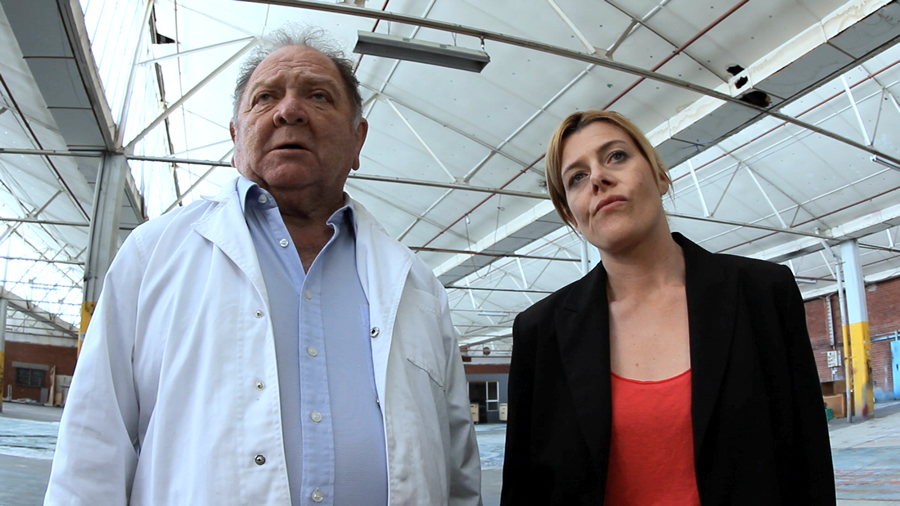
Still from Confessions of a Drunkard by Film By Democracy

So it’s the middle of NaNoWriMo, and Matthew has more or less left us to our own devices. We understand he’s passed the half way mark of 25,000 words, and is apparently four or five chapters away from finishing the draft of Prophecy, which will hopefully then make it into print after he finished editing it. Other than that, he says he’s struggling to make his word count targets and keep on top of everything else.

In more interesting news, Matthew is about to make his Big Screen debut in Film by Democracy‘s Confessions of a Drunkard, their entry into Melbourne’s 2012 48 Hour Film Festival. Matthew previously auditioned for a web series that never quite got off the ground, and was recently invited by director Monte Macpherson in the 48 Hour Film Project shoot. The Film By Democracy crew were given a film genre of Black Comedy, the character of an activist, the prop of a magnet, and the line “Let me tell you a secret,” all of which had to be included in the final film. Matthew played a largely improvised role of a partygoer–a metrosexual who was planning on being just gay enough to get the girl. He also possibly ended up murdered.

If you’d like to see him in all of his potential acting glory (we’re still dubious, but don’t tell him we said that, he won’t find out until he checks his website in December), you can come along to the second screening of 48 hour film festival entries:

Where: Cinema Nova, Lygon Street, Carlton
When: Wednesday, November 14,  8:15 PM for an 8:30 PM start
Tickets: General Admission $22, Concession $18.70, bookings here.


View Larger Map

In addition to Confessions of a Drunkard, you’ll also be able to see fifteen other short films. If Confessions of a Drunkard gets through to the top twelve, you can also come along to the Awards night on Friday the 16th of November. We can’t show you a video preview of the film, sadly, but we can show you film director Monte rushing to get the film finished and handed in on time.

We’ve also added the option for you to follow The Writing of Matthew Lang on Facebook via Networked Blogs–just click the follow button over on the right and you can access the latest from Matthew’s site directly from Facebook. Or you can just click here.

Matthew Lang’s Screens: Standalone and Extra Special

Matthew Lang’s short story Screens is now available on Amazon.com. We’ve convinced Matthew to do an experiment, and put it up on Kindle Select, and in celebration of National Novel Writing Month, we’re making it free for the next 3 days.  That’s the 1st to the 3rd of November, and it’s available right now. To get your copy, just click the book cover on the left.

You can of course still purchase Screens as part of the banQuetpress 2012 men Anthology, which is available in print and ebook.

National Novel Writing Months Starts Here

photo credit: a.drian via photopin cc

National Novel Writing Month sweeps around the globe and starts very close to me here in Australia. In some places, it’s already started, but here, it’s less than 1 hour away, and I’m wondering if I’m going to be staying up for a midnight start.

For anyone in the writing community who hasn’t stumbled across it yet, National Novel Writing Month, or NaNoWriMo, is an event that, last year, was celebrated, participated in, dreaded and lauded across the globe by over 250,000 writers, myself included.

The basic tenet of NaNoWriMo is the attempt to write a novel, or perhaps more accurately a novella in the month of November. The suggested word target is 50,000 words, or 1667 a day for 30 days.

Personally, I throw the guidelines out the window and aim for 2000 words a day and plow on with whatever writing project I’m currently working on, and this year, for the third time, I will be working on Prophecy, in this case, on the third draft, which I am happy to report is the first draft I’m happy with.

Now if you’re like me, and would like some visual encouragement, I’ve put together a tracking sheet for NaNoWriMo 2012 for rebels like me. Of course, it’s pretty much just like my 2011 spreadsheet, but if you’d like ready made for you, you can download it via the link below.

As per my annual tradition, during November, word count comes first to just about everything. I apologise in advance if I’m unresponsive, and I will do my best to catch up when I slow down in December. Until then, see you on the other side, and if you’re being as crazy as I am and diving into the writing, feel free to add me as a buddy.

NaNoWriMo Rebel Report Card 2012

Click here to download the spreadsheet